


The Power Surge: Factors driving the rising demand for electricity
Courtesy: National Rural Electric Cooperative Association (NRECA)
Across the U.S., the demand for power is climbing at one of the fastest rates in decades.
As the economy becomes more reliant on electricity and data centers continue to sprout up in many parts of the country, electric cooperatives are preparing to meet the challenges that skyrocketing demand brings.
The North American Reliability Corporation—the watchdog for the U.S. electric grid—recently released the 2025-26 winter reliability assessment, which echoed other recent reports, including longer-term outlooks that expect sufficient energy resources during normal conditions, but potential supply shortfalls and outages under more intense weather conditions.
Extreme weather coupled with additional factors that are driving increased demand creates challenges for electric utilities, including cooperatives, in their mission to provide reliable power around the clock.
Several key factors are driving increased demand—including economic growth, expanded manufacturing, data center development and increased electrification in transportation. Together, these trends are reshaping how much electricity we consume and how quickly utilities like Steele-Waseca Cooperative Electric must adapt to meet future needs.
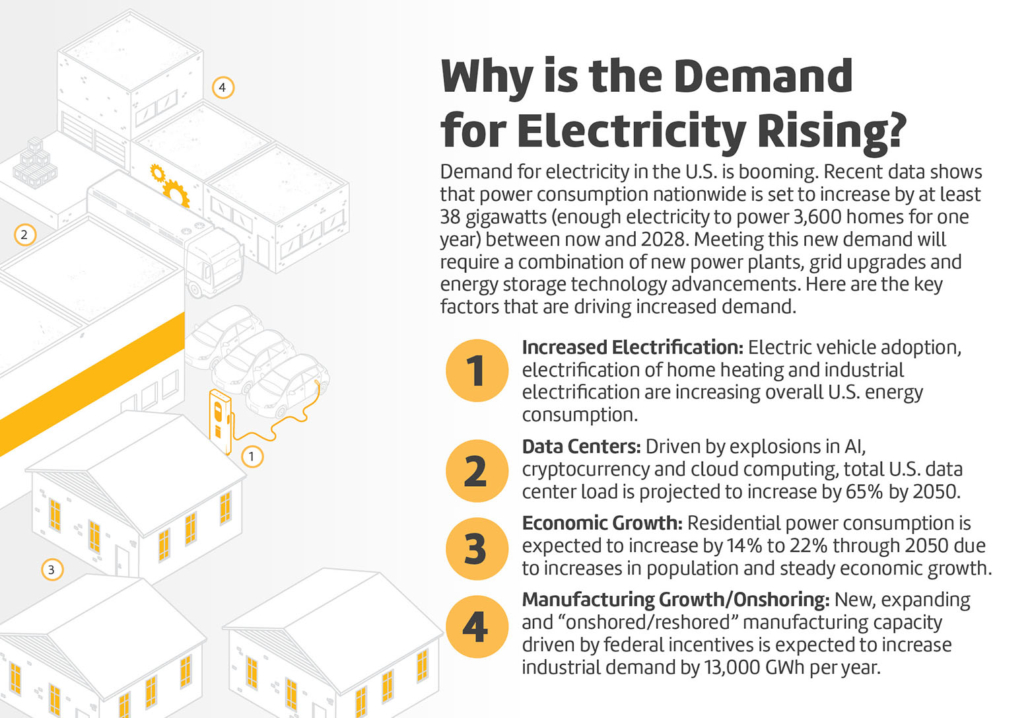
One of the biggest drivers of rising demand is increased electrification. More homes and businesses are transitioning to electricity for home heating, water heating, and transportation. EVs are becoming more common on the road, and many states are offering incentives to help consumers make the switch. Additionally, electric heat pumps are replacing traditional furnaces in many homes due to their efficiency. These transitions mean more energy use and pressure placed on our electric grid.
Data centers are another major contributor to rising demand. As AI, cryptocurrency and cloud computing technologies grow, the need for data processing and storage has skyrocketed. Data centers require huge amounts of power to operate servers and cooling systems 24/7. Tech companies are building new facilities nationwide—many of which are in electric cooperative-served areas—and these regions are experiencing multi-year surges in electricity demand as a result.
Economic and manufacturing growth are also contributing to higher electricity use. As businesses expand and new industries take root, especially in rural and suburban areas, the demand for reliable, high-capacity power is increasing. The resurgence of domestic manufacturing has led to major facility construction. These facilities often require substantial energy loads, and many operate continuously to keep production lines running. This growth brings jobs and investment, but it also puts new pressures on the electric grid.
Population growth and housing development are also contributing to rising demand in many regions, and everyday life is becoming more energy dependent, too. Smart appliances, connected devices, home offices and entertainment systems are adding to overall consumption, even as efficiency improves.
While increased demand presents new challenges for electric utilities, it also has the potential to create significant opportunities for co-ops and the communities they serve, such as job growth, steady revenue and improved infrastructure. Electric co-ops are responding by planning carefully for the future—investing in grid modernization and offering programs and services to help co-op members conserve energy.
Strategic planning is critical to ensuring the grid can support everything from EV charging to large-scale manufacturing plants.
Electricity powers nearly every aspect of today’s economy, and its role will only grow stronger. As electrification accelerates, long-term planning becomes more important than ever. Steele-Waseca is ready to meet rising demand in their local communities. Through innovation, investment and collaboration, we are preparing for a more reliable and resilient energy future.
Service
#swceSERVICE

