We're hiring! Learn more about this opportunity: swce.coop/careers
Contact Us/Report Outage: 507.451.7340 | Pay by Phone: 844.427.3417
Contact Us/Report Outage: 507.451.7340 | Pay by Phone: 844.427.3417

 What is capital credit equity?
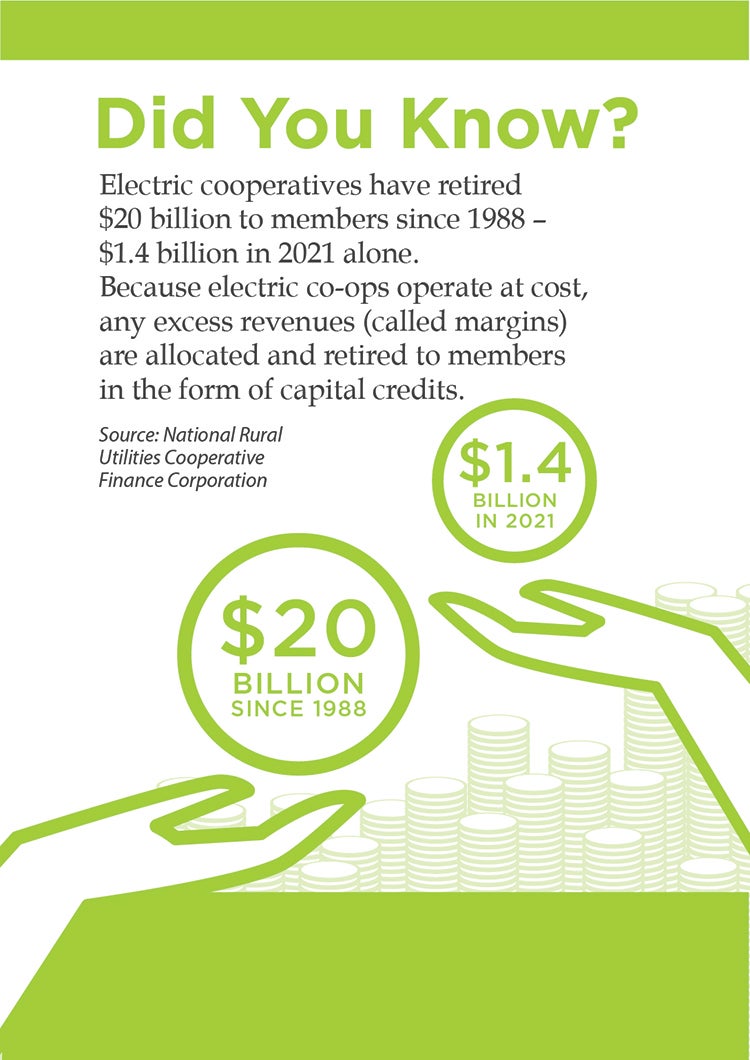
Capital credits represent your share of the ownership of the cooperative.
How are capital credits equity determined?
At the end of each calendar year, Steele-Waseca calculates its margins by subtracting total expenses from revenue earned through kilowatt-hour sales. These margins are used to pay down debt and invest in system improvements. The remaining amount is then allocated to member-consumers based on each member's annual electricity usage. This process gradually reduces lender equity and increases member ownership in the cooperative.
Capital credit allocations are typically completed six months after year-end. Active members will see a notice on their bill, while former members receive their allocation notice by mail.
When are capital credits equity retired (paid)?
When gross profit margins exceed the amount needed for debt payments and system investments, the cooperative uses the remaining funds to retire capital credit, as long as doing so does not negatively impact the co-op's financial stability.
Normal retirements occur every December. Steele-Waseca is currently on a 20-year rotation for retiring capital credits. Each year, our Board of Directors determines which year(s) of allocated capital credit are eligible for retirement. If you have capital credit from a year that is being retired, the refund will appear as a bill credit. Former members without an active account receive the refund by check.
Over the years, former members have requested a lump-sum payout for their remaining balance. However, paying an individual account early is considered an "early" or "special" retirement. Steele-Waseca does not allow early or special retirement capital credits. Steele-Waseca's only exception is estates. When a member passes away, the remaining balance may be paid to their heirs at a discounted rate set annually by the Board of Directors. Dissolved corporations are limited to normal retirement only.